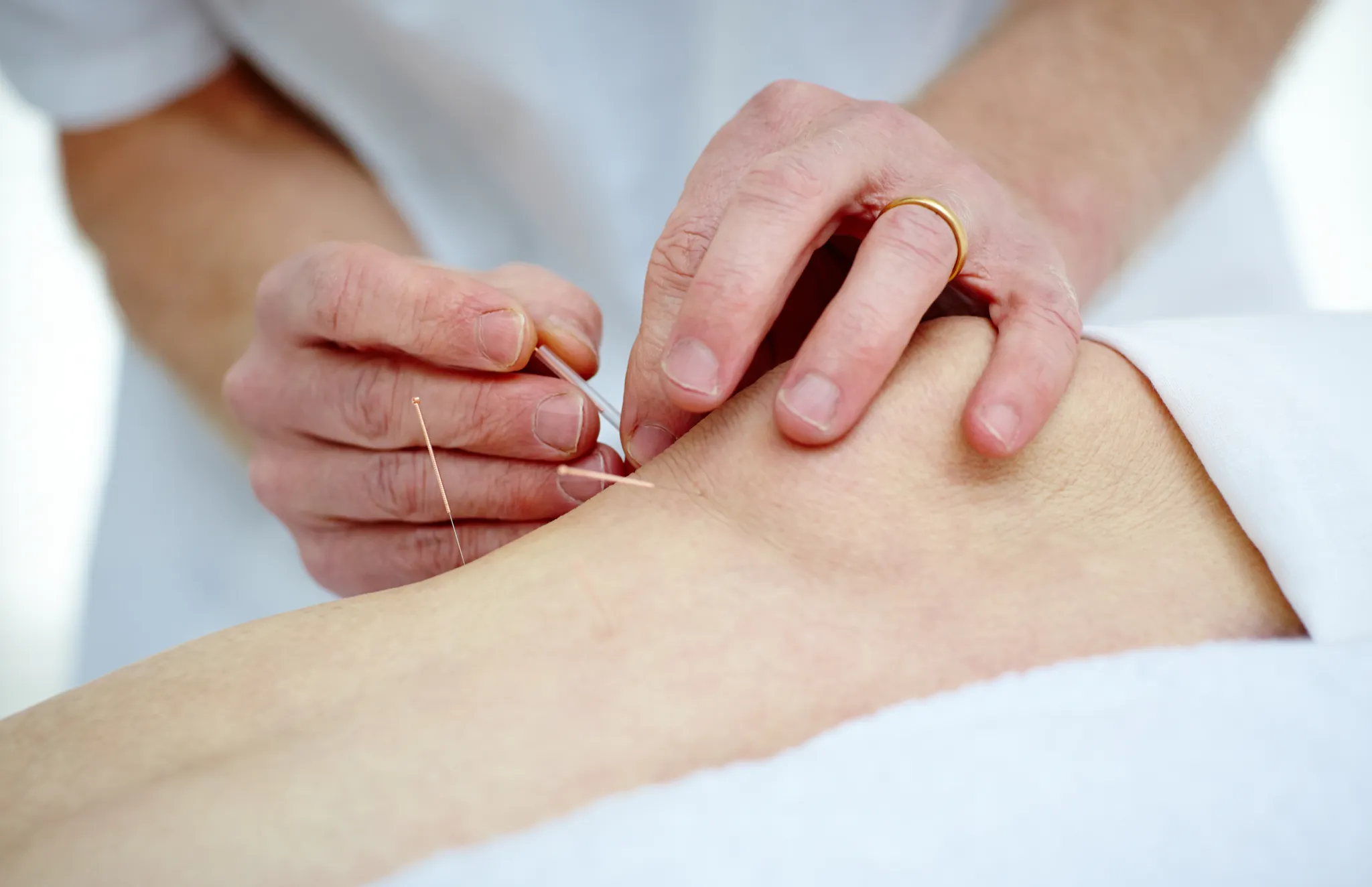
With regard to the 2026 Hando et al1 clinical trial (“Dry Needling Plus Manual Therapy and Exercise for Subacromial Pain Syndrome: a Sham-Controlled Randomized Clinical Trial”) that was recently published in JOSPT, we have several concerns that practicing clinicians (and academics designing clinical trials that include dry needling as an intervention) should likely recognize before taking the findings of this trial1 to the bank.
1. Hando et al1 found trigger point (emphasis added) dry needling targeting latent and active myofascial trigger points is not effective in the medium or long term for pain and disability reduction in patients with subacromial pain syndrome (SAPS). However, “trigger point dry needling” should not be considered an interchangeable or synonymous term with the much broader “dry needling”.2 For this reason, we believe the title of this study and the nomenclature used throughout the entire manuscript misleads clinicians to believe that all methods or subtypes of dry needling are not effective for patients with shoulder pain.
2. Although the authors stated “therapists used clinical reasoning to determine which muscles to treat at each session”,3 a recent meta-analysis concluded that the “use of manual palpation for identification of myofascial trigger points is unreliable”.4 Nevertheless, Hando et al1 still used manual palpation to decide where the 1-3 needles were placed on each patient, on each session and by each therapist. This is a major methodological design flaw as it severely damages the internal validity and limits the reproducibility of the target location (i.e., the correct needle entry point, depth and angulation) for the “trigger point” dry needling intervention used on each patient and on each treatment session for the entirety of the study.
3. Hando et al1 made no comparisons to the outcomes of other clinical trials that used different methods of dry needling for shoulder pain or SAPS. For example, in contrast to the dry needling intervention used in the Hando et al trial1 (i.e., pricking knots/trigger points in 1-3 superficial muscle bellies for just 5-30 seconds), the treatment protocol used in the Dunning et al (2021) trial5 (that reported medium and large effect sizes for pain and disability reduction in patient with SAPS) utilized bilateral and/or unilateral rotation manipulation6,7 of multiple needles8 that were left in situ and combined with electric stimulation9-12 to intramuscular, musculotendinous, teno-osseous, periosteal and periarticular tissues of the shoulder complex.2,13-16 In patients with chronic shoulder pain, pathoanatomic lesions (using MRI or real-time MSK ultrasonography) are commonly found in the musculotendinous and/or teno-osseus junctions of the supraspinatus and infraspinatus.17,18 However, Hando et al1 failed to directly address any of these important anatomical regions.
4. Unlike a prior randomized clinical trial that found dry needling effective for patients with subacute or chronic SAPS,5 Hando et al1 included patients with any duration of symptoms (i.e., just a few days, subacute, and chronic) which leaves those patients in the trial with acute SAPS (i.e., 1-30 days duration of symptoms) prone to natural history or healing over time irrespective of group assignment. Importantly, what proportion of the patients in the Hando et al trial1 that were classified as acute SAPS (just 1-30 days of shoulder pain) remains unknown. It is hard to believe that Hando et al (2026) designed a clinical trial and forgot to collect the duration of symptoms for each patient at baseline. Did the authors collect this data but choose to not report it? If data on duration of symptoms had been disclosed, a beta-coefficient or partial eta squared value could have been calculated to determine the percentage of change in the dependent variable (SPADI) that is accounted for by duration of symptoms (irrespective of group assignment)–as this factor alone may explain the findings of this trial. We asked two of the authors of the Hando et al (2026) trial on X (twitter) if they collected any data at baseline on the duration of the shoulder pain for each patient; however, they have declined to respond to this question. Therefore, we still have no idea if the majority of patients in the Hando et al (2026) trial had shoulder pain for just a few days, a few weeks, or a few years.
In addition, like an ankle sprain that took place a couple of days ago (or even 2 weeks ago), why would you want to stick needles near or at the site of injury in such an acute phase? That is, what is the clinical rationale and proposed physiological mechanisms for Hando et al (2026) using dry needling for shoulder pain that is just a few days old? Could it create excessive inflammation (swelling, bleeding etc) in the already acute fibroblastic phase of healing? Notably, much of the supporting research on the use of dry needling is for patients with subacute (31-90 days) or chronic (> 3 months) MSK pain conditions. Although Hando et al (2026) state these patients were “seeking care”, it is rather odd that an invasive procedure (i.e., needles inserted) was given to all patients in the trial that had shoulder pain for just a few days — as with or without needling, it is >80% certain that this acute pain will go away regardless of the intervention or group allocation. This is a major methodological design flaw for the Hando et al (2026) trial.
5. We find it interesting that Hando et al1 did not publish the customary and basic descriptive data (i.e., means and standard deviations) for the baseline, 6-week, 6-month, and 12-month SPADI scores of each group. Furthermore, the actual within-group and between-group change scores would have been more customary to publish (before the use of inferential statistical models) in Table 2, rather than the estimated marginal means following the use of linear marginal models and generalized estimating equations. We also find it rather interesting that Hando et al1 did not simply test the main hypothesis of interest with a 3-by-4 mixed-model analysis of covariance (ANCOVA) with treatment group as the between-subjects factor, time as the within-subjects factor, and adjusted for baseline data. Would use of this classic inferential statistical test have yielded a different outcome?
6. To design a clinical trial that attempts to improve shoulder pain and disability in the long term but only pricks 3 knots in superficial muscle bellies (as the “dry needling” intervention) falsely assumes that latent and active myofascial trigger points are the cause of the pain (condition) and not simply a secondary symptom of an underlying pain generator/pathoanatomic lesion/dysfunction/etiology. In our opinion, this is one reason why the authors found no between-group difference in disability (SPADI) at all time points; more specifically, the “dry needling” treatment used in the Hando et al1 trial didn’t target common regions of shoulder pathology. Therefore, the group that Hando et al1 labeled “PT + DN” is very likely functioning as a second placebo-needling group. When all 4 authors of the Hando et al trial protocol are full-time academics (or administrative commanders in the U.S. military),3 it is quite easy to see why the “dry needling” group employed does not reflect what is widely taking place in real clinical practice and does not contain a meaningful intervention with sufficient dosage.
7. For the reasons stated above, we believe Hando et al1 had two de facto placebo-needling groups; in addition, use of a sham-needling group was not necessary. That is, real (verum) acupuncture has already been found superior to placebo acupuncture in patients with SAPS.19-21 Moreover, a secondary analysis of an individual patient data meta-analysis of 29 trials (n=19,827) of acupuncture for chronic pain concluded that real acupuncture was superior to sham needling irrespective of the subtype of control or sham procedure (penetrating or non-penetrating).22
8. Given the Hando et al1 trial only recruited patients from within the U.S. Military Health System (i.e., the majority were active-duty Service members), the findings of the trial have limited external validity, generalizability, and applicability to most physical therapists who are seeing patients with SAPS from an entirely different population. Moreover, the specific population from where the sample was taken should have been transparently disclosed in the abstract, not just listed as one of the study limitations near the end of the manuscript.
9. Lastly, one of the co-authors (Dr. Josh Cleland) of the Hando et al (2026) trial1 is a current Editor and member of the JOSPT Editorial Board – the same journal that the study in question was published within. Given that the Editor-in-Chief of a scholarly journal typically selects and appoints their own team of Associate Editors, and given that the final decision on whether to accept, reject or require further modifications on a submitted manuscript rests with the Editor-in-Chief, without any further explanation needed, there is a potential conflict of interest that should have been disclosed by Hando et al1 on a “declaration of competing interests” statement within the article. Additionally, although we understand the idea of “blinded” manuscript review that journals attempt to employ during the peer-review process, a reviewer can simply search clinicaltrials.gov to determine who authored a clinical trial – and this can potentially adversely or favorably affect the peer-review process.
CONCLUSION
To avoid misleading practicing clinicians, we believe that Hando et al (2026)1 should have been required by the editorial team at JOSPT to title the study “trigger point dry needling” and use this nomenclature throughout the manuscript. Further, we believe Hando et al1 found no added benefit of dry needling following trigger point dry needling in patients with SAPS because they employed a second de facto placebo-needling group (i.e., pricking 1-3 superficial knots around the neck and shoulder for just 5-30 seconds) but labeled it a real or verum “dry needling” group. In addition, and importantly, unlike a prior randomized clinical trial that found dry needling effective for patients with subacute or chronic SAPS,5 Hando et al1 included patients with any duration of symptoms (i.e., acute, subacute, and chronic), but interestingly didn’t disclose any data on symptom duration for any of the subjects in the trial. That is, we still have no idea if the majority of patients in the Hando et al (2026) trial had shoulder pain for just a few days, a few weeks, or a few years.
AUTHORS
James Dunning, PhD, DPT, MSc, FAAOMPT, Dip. Osteopractic
Director, AAMT Fellowship in OMPT
President, American Academy of Manipulative Therapy
Montgomery Osteopractic Physical Therapy & Acupuncture, Montgomery, AL
Ian Young, DSc, OCS, SCS, FAAMT, RMSK, Dip. Osteopractic
Senior Faculty, AAMT Fellowship in Musculoskeletal Sonography
Director of Clinical Research, AAMT Fellowship in OMPT
Tybee Wellness & Osteopractic, Tybee Island, GA
Joshua Prall, DPT, EdD, FAAOMPT, Dip. Osteopractic
Associate Director, AAMT Fellowship in OMPT
Associate Director of Clinical Research, AAMT Fellowship in OMPT
Assistant Professor, Lebanon Valley College, PA
Paul Bliton, DPT, NCS, OCS, SCS, FAAOMPT, Dip. Osteopractic
Assistant Director, AAMT Fellowship in OMPT
William S. Middleton Veterans Hospital, Madison, WI
James Escaloni, DPT, OCS, FAAOMPT, RMSK, Dip. Osteopractic
Senior Faculty, AAMT Fellowship in Musculoskeletal Sonography
Assistant Director of Clinical Research, AAMT Fellowship in OMPT
REFERENCES
1. Hando BR, Rhon DI, Barker D, et al. Dry Needling Plus Manual Therapy and Exercise for Subacromial Pain Syndrome: A Sham-Controlled Randomized Clinical Trial. J Orthop Sports Phys Ther. Jan 2026;56(1):50-63. doi:10.2519/jospt.2025.13460
2. Dunning J, Butts R, Mourad F, Young I, Flannagan S, Perreault T. Dry needling: a literature review with implications for clinical practice guidelines. Phys Ther Rev. Aug 2014;19(4):252-265. doi:10.1179/108331913X13844245102034
3. Hando BR, Rhon DI, Cleland JA, Snodgrass SJ. Dry needling in addition to standard physical therapy treatment for sub-acromial pain syndrome: a randomized controlled trial protocol. Braz J Phys Ther. Jul-Aug 2019;23(4):355-363. doi:10.1016/j.bjpt.2018.10.010
4. Rathbone ATL, Grosman-Rimon L, Kumbhare DA. Interrater Agreement of Manual Palpation for Identification of Myofascial Trigger Points: A Systematic Review and Meta-Analysis. Clin J Pain. Aug 2017;33(8):715-729. doi:10.1097/AJP.0000000000000459
5. Dunning J, Butts R, Fernandez-de-Las-Penas C, et al. Spinal Manipulation and Electrical Dry Needling in Patients With Subacromial Pain Syndrome: A Multicenter Randomized Clinical Trial. J Orthop Sports Phys Ther. Feb 2021;51(2):72-81. doi:10.2519/jospt.2021.9785
6. Benham A, Johnson MI. Could acupuncture needle sensation be a predictor of analgesic response? Acupunct Med. Jun 2009;27(2):65-7. doi:10.1136/aim.2008.000174
7. Choi YJ, Lee JE, Moon WK, Cho SH. Does the effect of acupuncture depend on needling sensation and manipulation? Complement Ther Med. Jun 2013;21(3):207-14. doi:10.1016/j.ctim.2012.12.009
8. MacPherson H, Maschino AC, Lewith G, et al. Characteristics of acupuncture treatment associated with outcome: an individual patient meta-analysis of 17,922 patients with chronic pain in randomised controlled trials. PLoS One. 2013;8(10):e77438. doi:10.1371/journal.pone.0077438
9. Langevin HM, Schnyer R, MacPherson H, et al. Manual and electrical needle stimulation in acupuncture research: pitfalls and challenges of heterogeneity. J Altern Complement Med. Mar 2015;21(3):113-28. doi:10.1089/acm.2014.0186
10. Manheimer E, Cheng K, Linde K, et al. Acupuncture for peripheral joint osteoarthritis: a meta-analysis. The Cochrane database of systematic reviews. 2010;(1):CD001977. doi:10.1002/14651858.CD001977.pub2
11. Chen N, Wang J, Mucelli A, Zhang X, Wang C. Electro-Acupuncture is Beneficial for Knee Osteoarthritis: The Evidence from Meta-Analysis of Randomized Controlled Trials. Am J Chin Med. 2017;45(5):965-985. doi:10.1142/S0192415X17500513
12. Hao XA, Xue CC, Dong L, Zheng Z. Factors associated with conflicting findings on acupuncture for tension-type headache: qualitative and quantitative analyses. J Altern Complement Med. Apr 2013;19(4):285-97. doi:10.1089/acm.2011.0914
13. Krey D, Borchers J, McCamey K. Tendon needling for treatment of tendinopathy: A systematic review. Phys Sportsmed. Feb 2015;43(1):80-6. doi:10.1080/00913847.2015.1004296
14. Stoychev V, Finestone AS, Kalichman L. Dry Needling as a Treatment Modality for Tendinopathy: a Narrative Review. Curr Rev Musculoskelet Med. Feb 2020;13(1):133-140. doi:10.1007/s12178-020-09608-0
15. Dunning J, Butts R, Young I, et al. Periosteal Electrical Dry Needling as an Adjunct to Exercise and Manual Therapy for Knee Osteoarthritis: A Multicenter Randomized Clinical Trial. Clin J Pain. Dec 2018;34(12):1149-1158. doi:10.1097/AJP.0000000000000634
16. Weiner DK, Moore CG, Morone NE, Lee ES, Kent Kwoh C. Efficacy of periosteal stimulation for chronic pain associated with advanced knee osteoarthritis: a randomized, controlled clinical trial. Clin Ther. Nov 2013;35(11):1703-20 e5. doi:10.1016/j.clinthera.2013.09.025
17. Taneja AK, Kattapuram SV, Chang CY, Simeone FJ, Bredella MA, Torriani M. MRI findings of rotator cuff myotendinous junction injury. AJR Am J Roentgenol. Aug 2014;203(2):406-11. doi:10.2214/ajr.13.11474
18. Kim HM, Dahiya N, Teefey SA, et al. Location and initiation of degenerative rotator cuff tears: an analysis of three hundred and sixty shoulders. J Bone Joint Surg Am. May 2010;92(5):1088-96. doi:10.2106/jbjs.I.00686
19. Kleinhenz J, Streitberger K, Windeler J, Gussbacher A, Mavridis G, Martin E. Randomised clinical trial comparing the effects of acupuncture and a newly designed placebo needle in rotator cuff tendinitis. Pain. Nov 1999;83(2):235-41. doi:10.1016/s0304-3959(99)00107-4
20. Guerra de Hoyos JA, Andres Martin Mdel C, Bassas y Baena de Leon E, et al. Randomised trial of long term effect of acupuncture for shoulder pain. Pain. Dec 2004;112(3):289-98. doi:http://dx.doi.org/10.1016/j.pain.2004.08.030
21. Molsberger AF, Schneider T, Gotthardt H, Drabik A. German Randomized Acupuncture Trial for chronic shoulder pain (GRASP) – a pragmatic, controlled, patient-blinded, multi-centre trial in an outpatient care environment. Pain. Oct 2010;151(1):146-54. doi:10.1016/j.pain.2010.06.036
22. MacPherson H, Vertosick E, Lewith G, et al. Influence of control group on effect size in trials of acupuncture for chronic pain: a secondary analysis of an individual patient data meta-analysis. PLoS One. 2014;9(4):e93739. doi:10.1371/journal.pone.0093739