In response to the publication of our recent multi-center clinical trial that found periosteal and intraarticular electrical dry needling (PIEDN) effective for patients (n=586) with knee osteoarthritis,1 Dr. Jan Dommerholt (the owner of MyoPain dry needling seminars) sent a letter of complaint and inquiry (November 2025) to 26 State Boards of Physical Therapy.
This letter asked each State Board of Physical Therapy to opine on whether “intraarticular dry needling” is within the scope of practice of physical therapists, if PIEDN should be considered safe, and if our clinical trial should have attained ethical approval from a U.S.-based IRB rather than a university ethics committee in Madrid, Spain. Therefore, the following response is primarily directed to the Executive members of the 26 State Boards of Physical Therapy that are currently discussing the letter of complaint (from Dr. Dommerholt) about our recent PIEDN trial publication.1
WHY IS PERIOSTEAL & INTRAARTICULAR DRY NEEDLING USEFUL FOR KNEE OSTEOARTHRITIS?
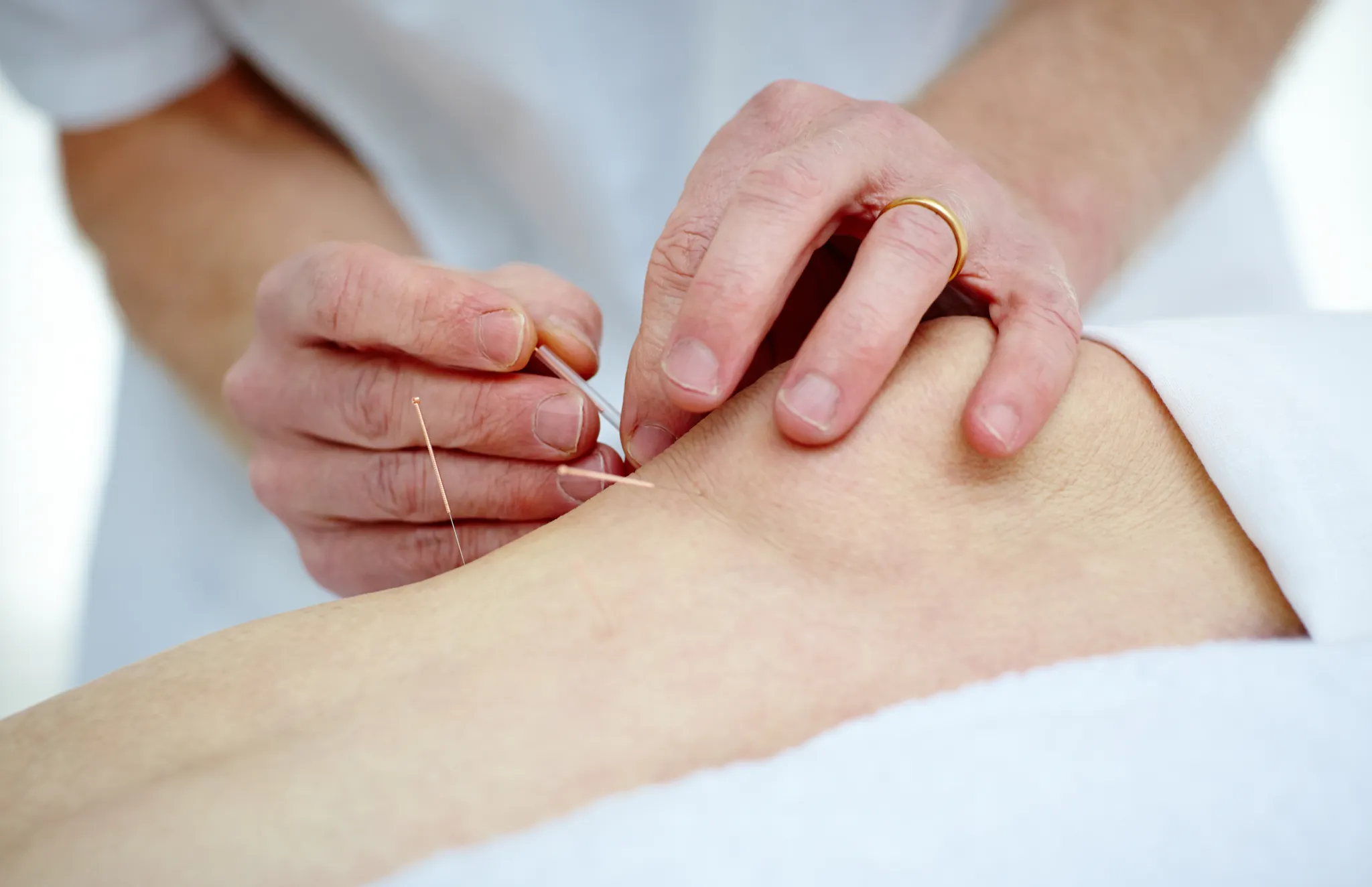
Periosteal and intra-articular electrical dry needling (PIEDN) is not a new approach in the treatment of knee osteoarthritis (OA).2-5 The positive effects and the neurophysiology of needling without injectate for knee OA are well documented.6-10
In clinical practice, pain may be a potential barrier leading to underdosage of strength training and aerobic exercise stimulus in individuals with painful knee osteoarthritis (OA); therefore, needling therapies may be a reasonable non-pharmacologic alternative for the reduction of persistent pain in individuals participating in exercise programs for knee OA.9,10 Needling therapy refers to the insertion of thin monofilament needles for therapeutic purposes without the use of injectate.11 However, unlike traditional Chinese acupuncture, Western medical acupuncture or dry needling neither attempts to move qi along meridians, nor does it rely on diagnoses from Oriental medicine.11-13
WHAT ARE THE PHYSIOLOGICAL MECHANISMS OF PERIOSTEAL & INTRAARTICULAR DRY NEEDLING?
The pathogenesis of knee OA commonly includes synovial hyperplasia, degradation of articular cartilage with osteophyte formation, degenerative menisci, microfractures, subchondral sclerosis, plate thickening, exposure of the articular end of the bone, and fat pad fibrosis/destruction.14-18
So how does PIEDN work? In short, the underlying neurophysiological mechanisms of PIEDN (including all periosteal and/or intraarticular needling therapies without injectate) in patients with knee osteoarthritis include:
- Significantly lowers T2 signal values in tibial weight-bearing cartilage on MRI (compared to traditional physiotherapy) suggesting a role in cartilage repair.6
- Blocks the local release of proinflammatory cytokines (i.e., IL-1β and TNF-α) in cartilage, synovium, and subchondral bone of osteoarthritic joints.19,20
- Decreases cartilage hypoxia by improving synovial microcirculation and fluid oxygen tension in knee OA.21
- Inhibits the NLRP3 inflammasome-associated protein in the synovial membrane, thereby downregulating the release of proinflammatory cytokines22,23 to alleviate pathophysiological changes within the arthritic joint.
- Stimulates sympathetic fibers in proximity to the periosteum to modulate knee joint microcirculation.24
- Reduces IL-6 mRNA expression in bone marrow, thereby limiting inflammation and inhibiting myelogenic osteoclast activity driving degeneration.25,26
- Facilitates a protective effect on cartilage, synovium, and infrapatellar fat pad destruction.22,23,27
- Reduces chronic intraarticular inflammation that aids in a shift from a destructive “acidic” microenvironment to a more “basic” (i.e., alkaline) microenvironment for the tissues involved. More specifically, in knee OA, the pH (i.e., the microenvironment) of articular cartilage, synovial fluid, and meniscus is significantly more acidic compared to joints without knee osteoarthritis, which then induces autophagy of osteoblasts, giving rise to further degeneration with increased levels of pain and disability.26,28
SAFETY OF PERIOSTEAL & INTRAARTICULAR ELECTRICAL DRY NEEDLING
In his recent letter to 26 State Boards of Physical Therapy, Dr. Jan Dommerholt claimed that “intraarticular dry needling” for knee OA may not be a safe procedure to use by physical therapists; however, following the delivery of PIEDN (involving “intraarticular dry needling”) by physical therapists in 26 states to over 707 patients with knee osteoarthritis in our two multi-center randomized clinical trials,1,2 no major adverse events (i.e., infection, hemarthrosis) were reported. Additionally, based on the adverse event reporting of four other randomized clinical trials using similar procedures,3-6 “intra-articular dry needling” is a safe and effective intervention for reducing pain and disability in patients with knee osteoarthritis.
TEXAS BOARD OF PHYSICAL THERAPY EXAMINERS OPINED THAT “INTRAARTICULAR DRY NEEDLING” IS WITHIN SCOPE OF PRACTICE
Within just days of receiving the letter of complaint (regarding the recent publication of our PIEDN multi-center randomized clinical trial1) that Dr. Jan Dommerholt sent (November 2025) to 26 State Boards of Physical Therapy, the Texas Board of Physical Therapy Examiners opined that “intraarticular dry needling” is within the scope of practice and nothing in the Texas Physical Therapy Practice Act would prohibit a physical therapist from using such. Notably there are over 1,800 PTs in the State of Texas (that AAMT has trained in this procedure) that have been using “intraarticular dry needling” in patients with knee OA for the past 9 years, and to date, there has not been a single case of a major adverse event (i.e., infection, hemarthrosis) documented or reported.
IRB & ETHICS APPROVAL FOR THE MULTI-CENTER RANDOMIZED CLINICAL TRIAL
Before any data collection began, the study protocol for the PIEDN multi-center randomized clinical trial1 was approved by the ethics committee at King Juan Carlos University, Madrid, Spain (URJC-DPTO 47-2021). In addition, the clinical trial was registered at ClinicalTrials.gov and all participants provided written informed consent prior to enrollment. Notably, ethics approvals from international IRBs serve an equivalent role to U.S.-based IRBs; that is, both equally protect the rights, welfare, and safety of research participants in clinical trials involving human subjects. Moreover, all IRBs adhere to the same core human subject protections, including respect for persons, beneficence, and justice as outlined in global guidelines and the Belmont Principles.
European-based IRBs are not uncommon for non-federally funded clinical trials;28.29 furthermore, given the lead author of the PIEDN clinical trial1 (i.e., James Dunning, PhD, DPT) completed a PhD at King Juan Carlos University (Madrid, Spain) with his doctoral dissertation2 on this same specialized area of PIEDN, the use of another U.S.-based IRB was not required or necessary.
AUTHORS
James Dunning, PhD, DPT, MSc, FAAOMPT, Dip. Osteopractic
Director, AAMT Fellowship in OMPT
President, American Academy of Manipulative Therapy
Montgomery Osteopractic Physical Therapy & Acupuncture, Montgomery, AL
Ian Young, DSc, OCS, SCS, Dip Osteopractic, FAAMT, RMSK
Senior Faculty, AAMT Fellowship in Musculoskeletal Sonography
Director of Clinical Research, AAMT Fellowship in OMPT
Tybee Wellness & Osteopractic, Tybee Island, GA
Joshua Prall, DPT, EdD, FAAOMPT, Dip. Osteopractic
Associate Director, AAMT Fellowship in OMPT
Associate Director of Clinical Research, AAMT Fellowship in OMPT
Assistant Professor, Lebanon Valley College, PA
Paul Bliton, DPT, NCS, OCS, SCS, FAAOMPT, Dip. Osteopractic
Assistant Director, AAMT Fellowship in OMPT
William S. Middleton Veterans Hospital, Madison, WI
James Escaloni, DPT, OCS, FAAOMPT, Dip. Osteopractic, RMSK
Senior Faculty, AAMT Fellowship in Musculoskeletal Sonography
Assistant Director of Clinical Research, AAMT Fellowship in OMPT
REFERENCES
1. Dunning J, Young I, Taylor N, et al. Effect of dose interval of periosteal and intraarticular electrical dry needling boosters on pain and disability in patients with knee osteoarthritis: a multi-center randomized clinical trial. Physiother Theory Pract. Oct 17 2025:1-14. doi:10.1080/09593985.2025.2575837
2. Dunning J, Butts R, Young I, et al. Periosteal Electrical Dry Needling as an Adjunct to Exercise and Manual Therapy for Knee Osteoarthritis: A Multicenter Randomized Clinical Trial. Clin J Pain. Dec 2018;34(12):1149-1158. doi:10.1097/AJP.0000000000000634
3. Elbadawy MA. Effectiveness of Periosteal Stimulation Therapy and Home Exercise Program in the Rehabilitation of Patients With Advanced Knee Osteoarthritis. Clin J Pain. Mar 2017;33(3):254-263. doi:10.1097/AJP.0000000000000404
4. Weiner DK, Moore CG, Morone NE, Lee ES, Kent Kwoh C. Efficacy of periosteal stimulation for chronic pain associated with advanced knee osteoarthritis: a randomized, controlled clinical trial. Clin Ther. Nov 2013;35(11):1703-20 e5. doi:10.1016/j.clinthera.2013.09.025
5. Weiner DK, Rudy TE, Morone N, Glick R, Kwoh CK. Efficacy of periosteal stimulation therapy for the treatment of osteoarthritis-associated chronic knee pain: an initial controlled clinical trial. J Am Geriatr Soc. Oct 2007;55(10):1541-7. doi:10.1111/j.1532-5415.2007.01314.x
6. Zhang Y, Bao F, Wang Y, Wu Z. Influence of acupuncture in treatment of knee osteoarthritis and cartilage repairing. Am J Transl Res. 2016;8(9):3995-4002.
7. Zhang R, Lao L, Ren K, Berman BM. Mechanisms of acupuncture-electroacupuncture on persistent pain. Anesthesiology. Feb 2014;120(2):482-503. doi:10.1097/aln.0000000000000101
8. Zhang Q, Zhou M, Huo M, et al. Mechanisms of acupuncture-electroacupuncture on inflammatory pain. Mol Pain. Jan-Dec 2023;19:17448069231202882. doi:10.1177/17448069231202882
9. Corbett MS, Rice SJ, Madurasinghe V, et al. Acupuncture and other physical treatments for the relief of pain due to osteoarthritis of the knee: network meta-analysis. Osteoarthritis Cartilage. Sep 2013;21(9):1290-8. doi:10.1016/j.joca.2013.05.007
10. Lin X, Huang K, Zhu G, Huang Z, Qin A, Fan S. The Effects of Acupuncture on Chronic Knee Pain Due to Osteoarthritis: A Meta-Analysis. J Bone Joint Surg Am. Sep 21 2016;98(18):1578-85. doi:10.2106/JBJS.15.00620
11. Dunning J, Butts R, Mourad F, Young I, Flannagan S, Perreault T. Dry needling: a literature review with implications for clinical practice guidelines. Phys Ther Rev. Aug 2014;19(4):252-265. doi:10.1179/108331913X13844245102034
12. Deadman P, Al-Khafaji M., Baker, K. A manual of acupuncture. 2nd ed. Journal of Chinese Medicine Publications; 2011.
13. Zhou K, Ma Y, Brogan MS. Dry needling versus acupuncture: the ongoing debate. Acupunct Med. Dec 2015;33(6):485-90. doi:10.1136/acupmed-2015-010911
14. Martel-Pelletier J. Pathophysiology of osteoarthritis. Osteoarthritis Cartilage. Jul 1999;7(4):371-3. doi:10.1053/joca.1998.0214
15. Carter DR, Beaupre GS, Wong M, Smith RL, Andriacchi TP, Schurman DJ. The mechanobiology of articular cartilage development and degeneration. Clin Orthop Relat Res. Oct 2004;(427 Suppl):S69-77.
16. Ene R, Sinescu RD, Ene P, Cirstoiu MM, Cirstoiu FC. Synovial inflammation in patients with different stages of knee osteoarthritis. Rom J Morphol Embryol. 2015;56(1):169-73.
17. Ozeki N, Koga H, Sekiya I. Degenerative Meniscus in Knee Osteoarthritis: From Pathology to Treatment. Life (Basel). Apr 18 2022;12(4)doi:10.3390/life12040603
18. Wang MG, Seale P, Furman D. The infrapatellar fat pad in inflammation, knee joint health, and osteoarthritis. npj Aging. 2024;10(1):34.
19. Huang J, Zhuo LS, Wang YY, et al. [Effects of electroacupuncture on synovia IL-1beta and TNF-alpha contents in the rabbit with knee osteoarthritis]. Zhen Ci Yan Jiu. Apr 2007;32(2):115-8.
20. Lou Z, Bu F. Recent advances in osteoarthritis research: A review of treatment strategies, mechanistic insights, and acupuncture. Medicine (Baltimore). Jan 24 2025;104(4):e41335. doi:10.1097/MD.0000000000041335
21. Weiwei M, Mei D, Juan L, et al. Electroacupuncture improves articular microcirculation and attenuates cartilage hypoxia in a male rabbit model of knee osteoarthritis. J Tradit Complement Med. Jul 2024;14(4):414-423. doi:10.1016/j.jtcme.2024.01.002
22. Clavijo-Cornejo D, Martínez-Flores K, Silva-Luna K, et al. The Overexpression of NALP3 Inflammasome in Knee Osteoarthritis Is Associated with Synovial Membrane Prolidase and NADPH Oxidase 2. Oxid Med Cell Longev. 2016;2016:1472567. doi:10.1155/2016/1472567
23. Han X, Lin D, Huang W, Li D, Li N, Xie X. Mechanism of NLRP3 inflammasome intervention for synovitis in knee osteoarthritis: A review of TCM intervention. Front Genet. 2023;14:1159167. doi:10.3389/fgene.2023.1159167
24. Loaiza LA, Yamaguchi S, Ito M, Ohshima N. Electro-acupuncture stimulation to muscle afferents in anesthetized rats modulates the blood flow to the knee joint through autonomic reflexes and nitric oxide. Auton Neurosci. May 31 2002;97(2):103-9. doi:10.1016/s1566-0702(02)00051-6
25. Liu X, Shen L, Wu M, et al. Effects of acupuncture on myelogenic osteoclastogenesis and IL-6 mRNA expression. J Tradit Chin Med. Jun 2004;24(2):144-8.
26. Zhang Z, Lai Q, Li Y, et al. Acidic pH environment induces autophagy in osteoblasts. Sci Rep. Apr 6 2017;7:46161. doi:10.1038/srep46161
27. Zhang W, Zhang L, Yang S, Wen B, Chen J, Chang J. Electroacupuncture ameliorates knee osteoarthritis in rats via inhibiting NLRP3 inflammasome and reducing pyroptosis. Mol Pain. Jan-Dec 2023;19:17448069221147792. doi:10.1177/17448069221147792
28. Lombardi AF, Ma Y, Jang H, et al. AcidoCEST-UTE MRI Reveals an Acidic Microenvironment in Knee Osteoarthritis. Int J Mol Sci. Apr 18 2022;23(8)doi:10.3390/ijms23084466